In 2024, out of 40,000+ startup applications,
Y Combinator funded just 450 startups
With acceptance rate of less than 2%
Y Combinator is one of the most competitive incubators.


GoCardless is a fintech company building a global bank payment network enabling direct payments for businesses.
1/2
Accepted
Rejected

GoCardless got into YC & is $2.4B company
Can you guess which company got into YC?



















If Y Combinator is so selective,
why is it backing multiple players
solving the same problem?
Many people believe that a startup must be radically novel to get funded by Y Combinator.
But the truth might be far from this. Is originality dead in the startup industry? Let’s find out.
Story written and designed by
Many Y Combinator startups are
strikingly similar
Payment gateway • 9

Stripe
Active • $56B • 5000+ employees

Razorpay
Active • $8B • 3000+ employees

Wave
Active • 500+ employees

Xendit
Acquired • 400+ employees

Flutterwave
Acquired

Paystack
Active • 200+ employees

Tremendous
Active • 10+ employees

goDutch
Inactive

Kash
Acquired
Online food delivery • 8

Doordash
Public • $56B • 5000+ employees

Razorpay
Active • $8B • 3000+ employees

Wave
Active • 500+ employees

Snackpass
Acquired • 400+ employees

Mylkguys
Inactive

ZipX
Acquired

Riogrande
Acquired

Madeats
Acquired
Online food delivery • 8

Doordash
Public • $56B • 5000+ employees

Momeze
Acquired

Let’s do this
Active • 500+ employees

hipmunk
Acquired

Getgoing
Failed

ZipX
Failed

Hexel
Failed
YC has helped some famous companies.
Even has taken them public
All
Public
Active
Acquired
Failed
YC has helped some famous companies.
Even has taken them public
But a lot of them have failed & gotten acquired
What looks like repetition, could it be YC’s strategy?
Now we know that Y Combinator funds multiple startups with nearly identical ideas. It seems wasteful. Confusing. At first glance, it seems like a mistake—or at least inefficient. But what if there's business to it.
To understand this, let's look at the infographic.
+$125,000
+$475 mill
~ $476 million
$625,000
-$250,000
$625,000
Initial investment
1
2

3
4

5

YC invested $125,000 in each company for 7% equity. That's 5 bets on similar ideas.
what is equity?

What looks like redundancy is actually the only rational strategy in a hits-driven business. YC knows that most investments will fail or return modest multiples. They're not trying to avoid failure—they're trying to ensure they're in the room when exponential success happens.
You don't need five wins. You need one Stripe, one Airbnb, one DoorDash. That single outlier will generate returns that make every loss, every write-off, every failed bet completely irrelevant.
That's why YC bets on similar ideas, back competing startups, and invest in spaces that look crowded. They're not hoping lightning strikes. They're buying enough lottery tickets to guarantee they're holding the winning number.
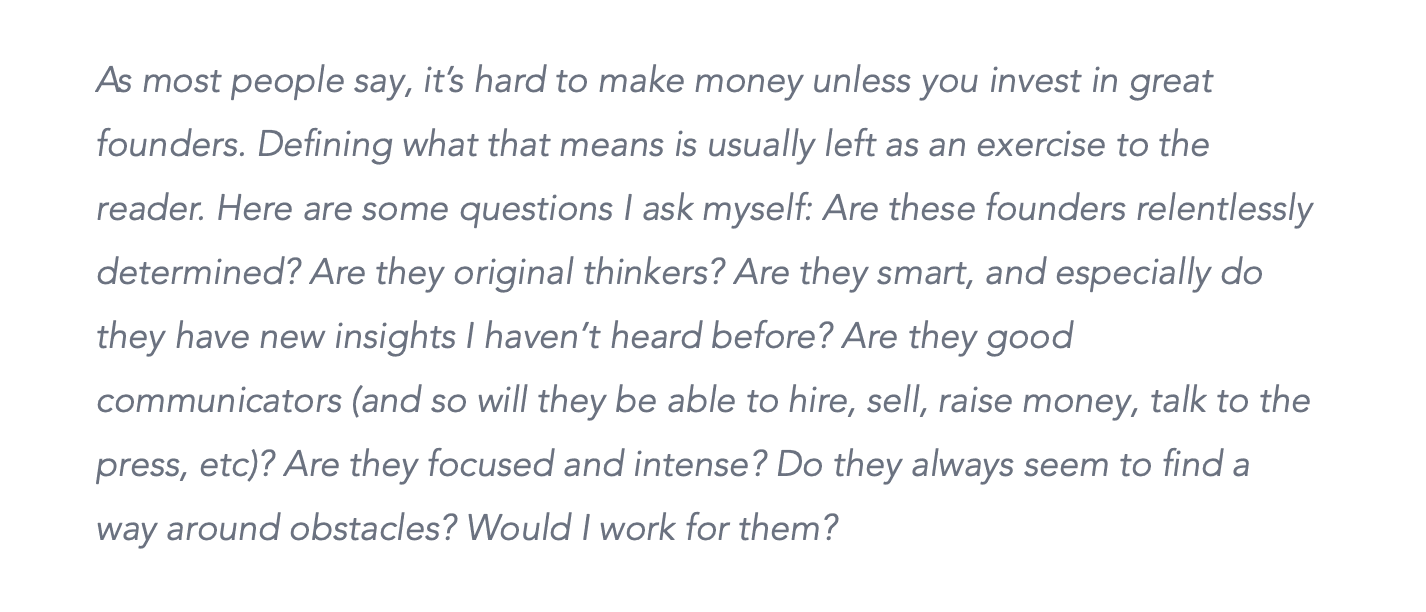
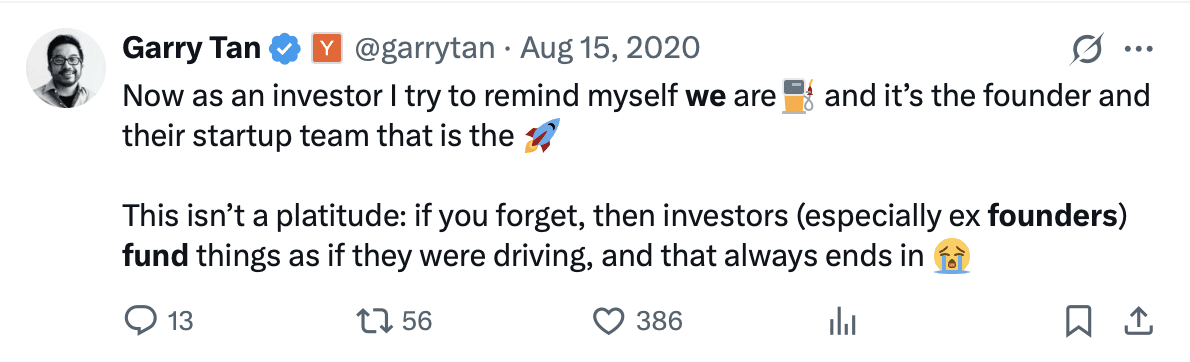
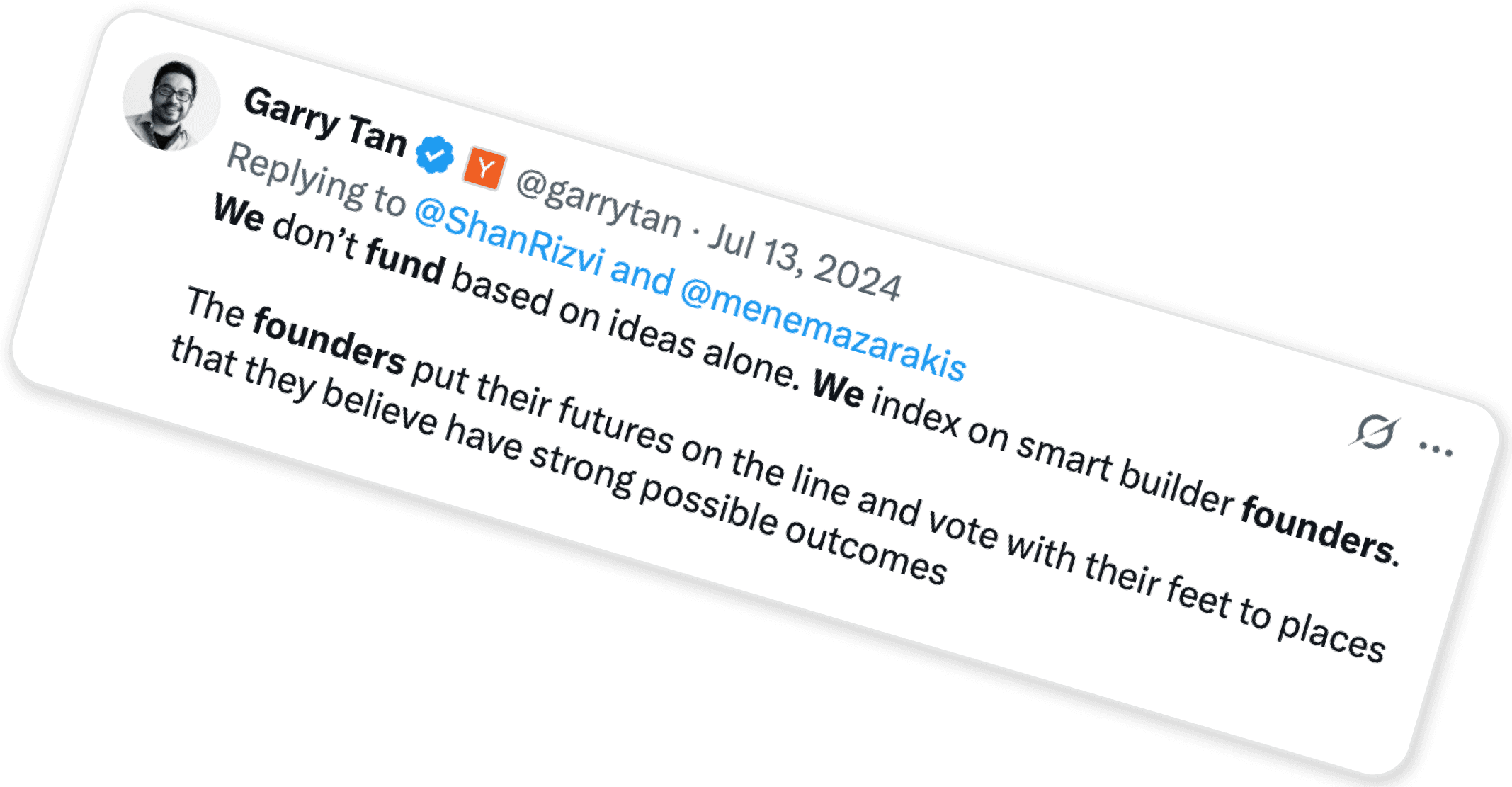
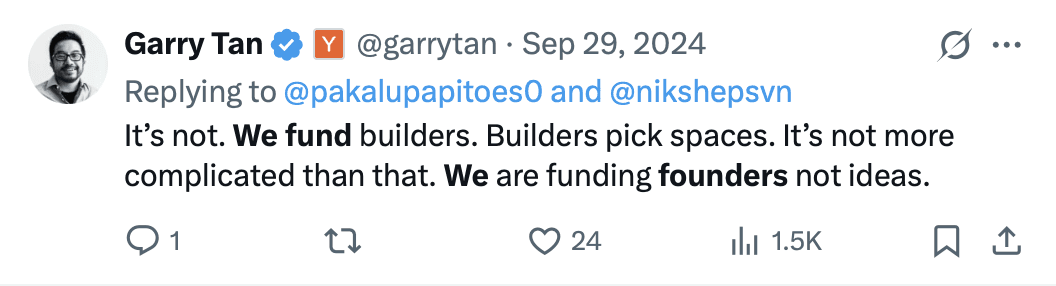
Tan points out that the best founders don’t treat their startup as a fixed concept but as a constant experiment. YC’s job, therefore, isn’t to predict which idea will work — it’s to back the people who will find the idea that works. That’s why YC’s track record isn’t defined by perfect ideas, but by resilient, adaptable founders who turn iterations into success stories.
Here’s an insider look into Y Combinator’s
investment philosophy

So, what does it take to be a successful founder?
Let’s look at interviews from top YC founders to see what stands out and what that reveals about Y Combinator’s standards for acceptance.
-HOVER ON THE TEXT-
Stanford
Harvard
UC
Berkeley
CMU
IITian
Oxford
shipped
products
hustle
Palantir
Microsoft
technical founder
solve problems
consulting
research
economics
statistics
statistics
AI
electrical engineering
mechanical engineering
leetcode
coding
ship fast, fail fast
early founder
physics
experience
OSS
Dropbox
drop-out
good side projects
personal pain point
startup school
investment
machine learning
designer
product
product
Georgia Tech
mathamatics
build build build
leadership roles
young
Waterloo
Stripe
Airbnb
early career
fast learner
Cambridge
iterated on prototypes
new
modern
user experience
skillsets
cool ideas
Columbia Uni
community
Waterloo
valuation
$$$
unicorn
technical
degree
projects
industry
early on
shipping fast
dropout
algorithm
potential
AI
.js
ideas
great
san francisco
demo day
startup attempt
bangalore
funding
marketing
product-market fit
growth
money
technical know-how
new bie
concepts
pop
Cornell
founder experience
profit
cofounder with complementary
skills
UC
team formation
previous startup
Cornell
fast
YC startup school
building tools
previous startup
economics
MBA
strong portfolio
start-up
robotics
domain expertise
hackathons
Uber
business
MIT
builder mindset
computer science
engineering