Exclusivity
or Strategy
Many people believe that a startup must be radically novel to get funded by Y Combinator.
But the truth might be far from this. Is originality dead in the startup industry? Let’s find out.
Story written and designed by Madhurima and Rakshit
Last year, out of 40,000 applications,
Y Combinator funded just 450 startups.
That is 2% acceptance rate, being one of the top most competitive incubators.
Lorem Ipsum has been the industry's standard dummy text ever since the 1500s, when an unknown printer took a galley of type and scrambled it to make a type specimen book. It has survived not only five centuries, but also the leap into electronic typesetting, remaining essentially unchanged. It was popularised in the 1960s with the release of Letraset sheets containing Lorem Ipsum passages, and more recently with desktop publishing software like Aldus PageMaker including versions of Lorem Ipsum.
Round 1
Can you guess if the startup was funded by YC?

Oxygen
Oxygen is a fintech company, offering business banking focused on businesses. Currently, oxygen is on the verge of shutting down.
Yes funded
No funding

GoCardLess
GoCardless is a fintech company building a global bank payment network enabling direct payments for businesses.
Yes funded
No funding
YC's portfolio
YC funds similar companies in each sector
YC has funded billion dollar companies like Doordash, Stripe, and Airbnb. Yet their database (2005-24) reveals dozens of similar companies for each winner. Most are either still trying, acquired, or failed.
CEO says
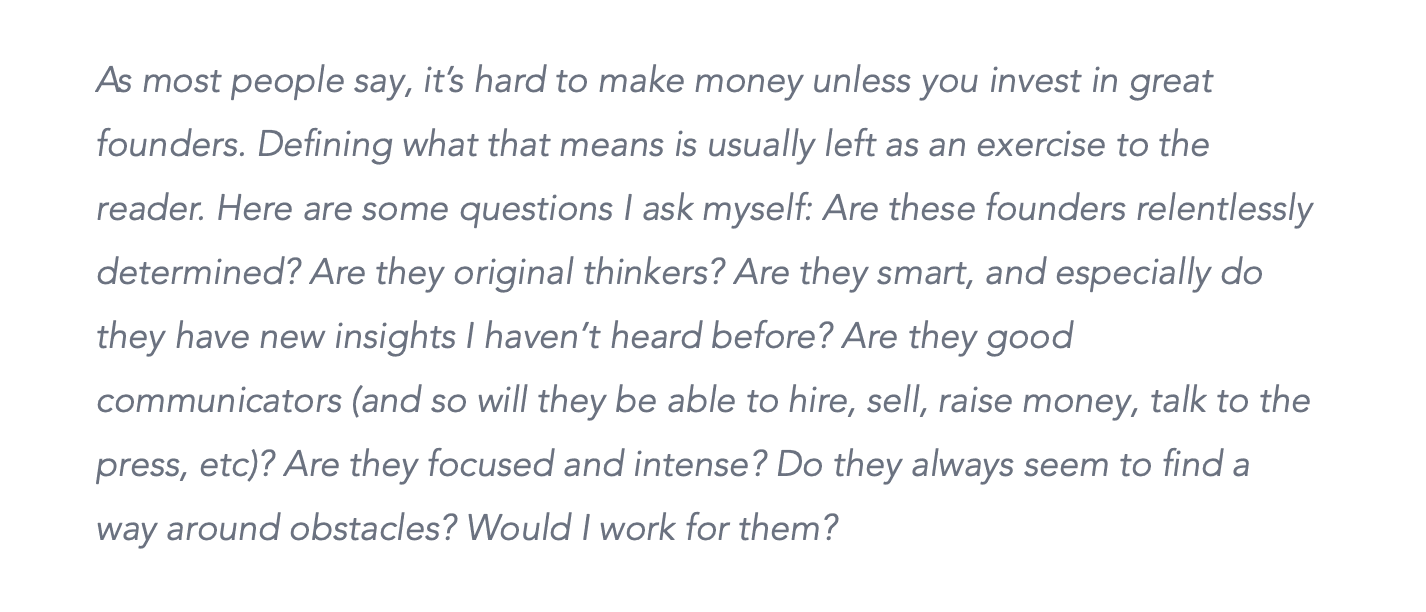
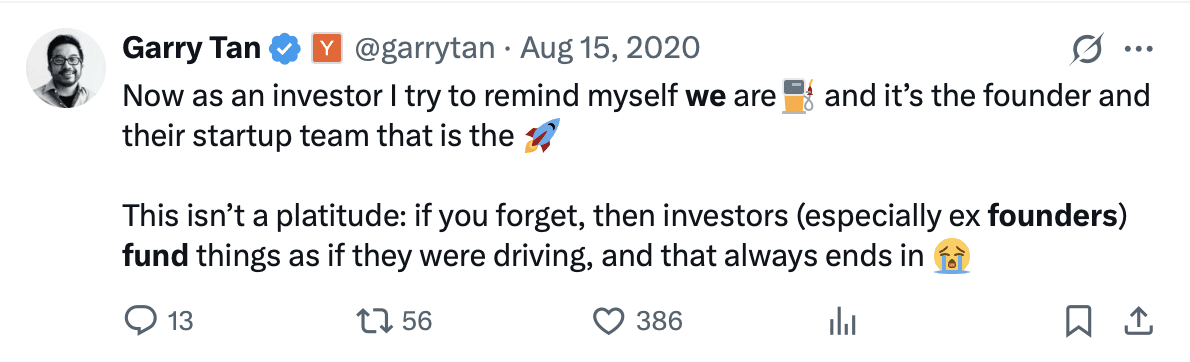
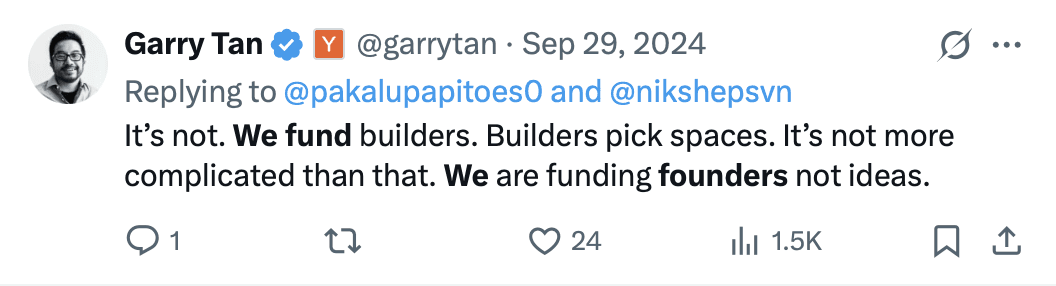
YC believes in investing in founders rather than companies
Tan points out that the best founders don’t treat their startup as a fixed concept but as a constant experiment. YC’s job, therefore, isn’t to predict which idea will work — it’s to back the people who will find the idea that works. That’s why YC’s track record isn’t defined by perfect ideas, but by resilient, adaptable founders who turn iterations into success stories.


Data deep dive
Distribution of founders & their backgrounds
Most YC founders come from CSE backgrounds, often graduating from top schools like Stanford and having work experience at big tech companies.
gender
- 81.65%
- 18.35%
schools
- 22.62%
- 17.98%
- 14.46%
field
- 59.59%
- 9.35%
- 8.18%
work
- 36.37%
- 34.59%
- 15.48%